
MISUSE 01: Establish a work plane in the vertical orientation for sectional elements to attach to. In Revit, the default work plane is in plan. Misuse 01 works against the tool by establishing a default work plane in section.
1- The Architecture of Error:
- Read HUGHES_The Architecture of Error- Intro.
- Define precision and error.
2- Constructional Material Conditions:
- Interrogate elements and materials in the Agricultural Heritage Museum.
- Document what currently exists by cutting sections through the building.
Wednesday 08.28_Misuse 01 (Due 08.30 and 09.04)
Refer to the project brief 1.0 The Four Misuses and the lecture 01_Misuse 01_Work Planes & Model Lines for more information.
1- Open 00_Agricultural Heritage Museum Revit 2018 Template in Revit. It is a template file. Click on Level 1 to see the footprint of the original 1918 and the 1925 addition. On the left of the screen, look for Project Browser. Notice the five (5) Sections and the five (5) Sheets.
2- For Sections 1-3, you must draw the profile line of the section cut. You do not need to distinguish between materials. Simply draw a line around the thickness of the walls, roofs, floors, and ground to distinguish between matter and space.
- The blue grid is the Work Plane.
- The Green Rectangle shows the extents of the section profile to be drawn. You
- may erase it.
- Level 1 corresponds to the top of the first floor.
- Use Model Lines to draw the section profile.
- Use Medium Lines to draw the section profile.
- No elevation lines need to be drawn.
3- Save your file as 190830_Existing Sections on Box.com and on your computer. This must be completed individually. Be ready to project one section on Friday 08.30 and all three sections on Wednesday 09.04.
Monday 08.26_Interrogating an Existing Building- The Agricultural Heritage Museum
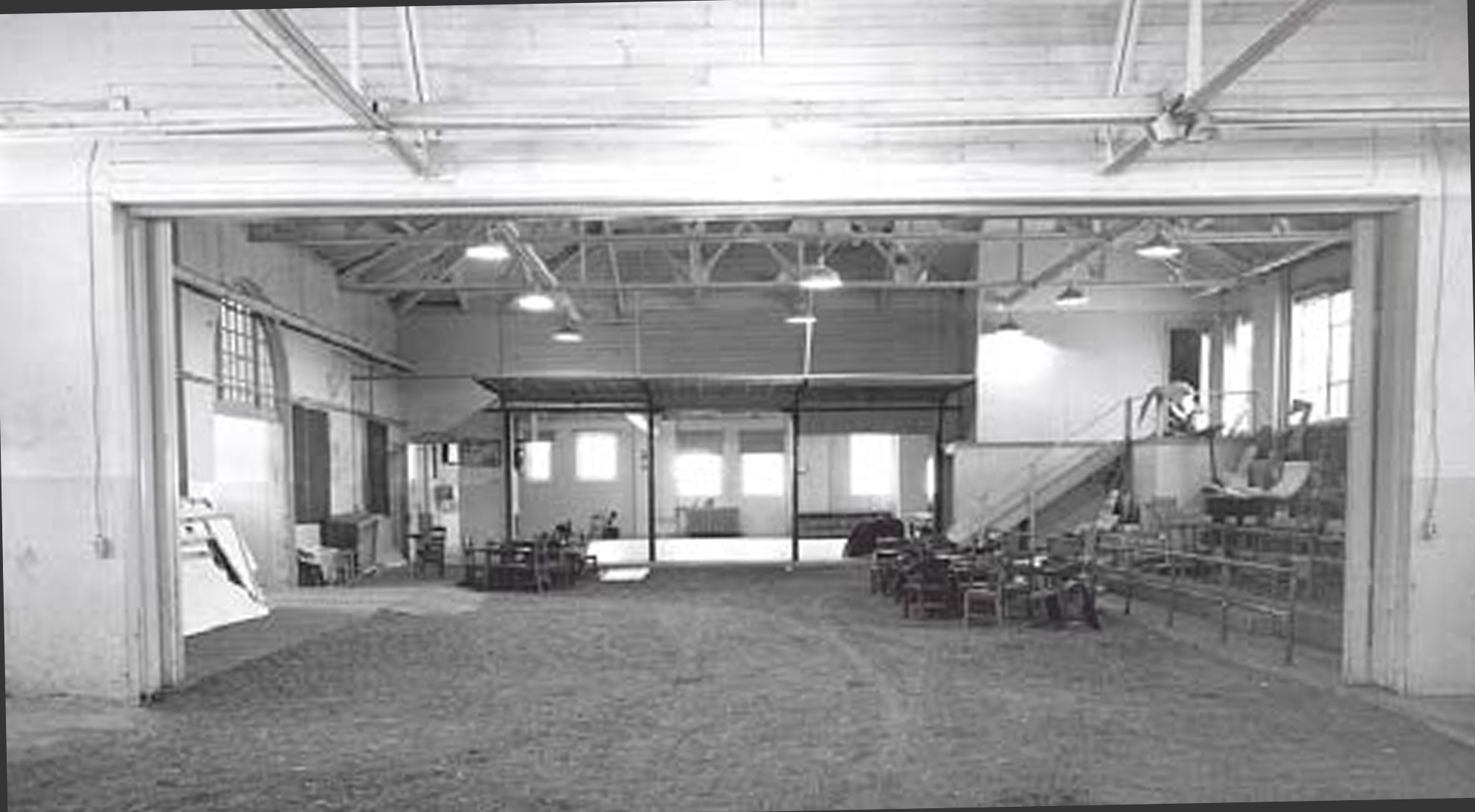
Built in 1918, the SDSU Stock Judging Pavilion was constructed using steel components, concrete, and masonry construction. The 1925 west side addition continued the structural vocabulary of the original building, but also included concrete mushroom columns in order to make space for the Meat Lab. As the SDSU Agricultural Heritage Museum, the current building stands as an eclectic mix of non-standard components and narratives that have evolved since 1918. You may download existing documents of the Agricultural Heritage Museum here.
For Wednesday 08.28 look through the Agricultural Heritage Museum Documents (see link above) and download Revit 2019 or Revit 2020.
For Friday 08.30 read the Introduction to The Architecture of Error by Francesca Hughes.

 DoArch Constructional Performances